Every parent eagerly waits for their child’s first word. When your toddler says “mama” or “baba” for the first time, it feels like magic. But what happens when those words don’t come as expected? If you’re worried because your toddler isn’t talking as much as other children their age, you’re not alone. Many parents in Pakistan face uncertainty about their child’s speech development and wonder whether they should be concerned or just patient.
Understanding the early signs of speech delay in toddlers can help you take timely action. This guide will walk you through normal speech milestones, warning signs to watch for, and when it’s time to seek professional help from specialists in speech therapy in Islamabad.
What is Speech Delay in Toddlers?
Speech delay happens when a child doesn’t reach typical language development milestones at the expected age. It’s important to understand that speech delay is different from a speech disorder. A delay means your child is developing communication skills but at a slower pace than their peers. Many toddlers who are late talkers eventually catch up, while others may need speech therapy to develop proper verbal communication.
There are two main types of language challenges parents should know about. Expressive language delay means your child understands what you say but struggles to express themselves through words. Receptive language delay means your child has difficulty understanding language and following directions. Sometimes children experience both types, which is why early intervention becomes even more important.
The good news is that speech delay is one of the most common developmental concerns, affecting roughly one in five toddlers. With proper support from a therapy center for special children in Islamabad, most children show significant improvement.
Normal Speech Development Milestones by Age
Before identifying potential delays, it helps to know what typical speech development looks like. Every child is unique, but these general milestones can guide you:
12 Months (1 Year Old) At this age, most babies start saying their first meaningful words like “mama” or “baba.” They respond to their name, understand simple commands like “come here,” and communicate through gestures like waving or pointing. Babbling becomes more varied, and they may try to imitate sounds they hear.
18 Months (1.5 Years Old) By eighteen months, toddlers typically use 10 to 20 words and can point to familiar objects when named. They understand simple questions and follow one-step directions. Your child might say “more” when they want something or shake their head for “no.”
24 Months (2 Years Old) Two-year-olds usually speak 50 or more words and begin combining two words together, like “more milk” or “daddy go.” They can follow two-step instructions such as “pick up the toy and give it to me.” At this stage, about half of what they say should be understandable to strangers.
36 Months (3 Years Old) By age three, most children use 200 to 1,000 words and speak in three to four-word sentences. They can tell simple stories, ask questions, and are understood by people outside the family about 75% of the time. They also start using pronouns like “I,” “you,” and “me” correctly.
Remember, these are general guidelines. Some children naturally develop language skills a bit earlier or later. However, significant delays beyond a few months may require evaluation by a child speech therapist near you in Islamabad.
Early Warning Signs of Speech Delay
Recognizing the red flags early can make all the difference. Here are specific warning signs to watch for at different ages:
Warning Signs at 12 Months: Your child doesn’t babble or make varied sounds, doesn’t respond when you call their name, shows no interest in interactive games like peek-a-boo, or doesn’t use gestures such as waving or pointing.
Warning Signs at 18 Months: Your toddler has fewer than six words, doesn’t point to show you things, doesn’t understand simple commands, or prefers gestures over attempting any words.
Warning Signs at 24 Months: Your two-year-old uses fewer than 25 words, doesn’t combine two words together, can’t follow simple two-step directions, or only imitates speech without using words spontaneously.
Warning Signs at 36 Months: Your three-year-old speaks in mostly single words, cannot be understood by family members, doesn’t ask questions, shows no interest in interactive play with other children, or has lost speech skills they previously had.
Additional red flags at any age include not making eye contact during communication, showing frustration when trying to communicate, not responding to sounds or voices, and having difficulty eating or swallowing (which may indicate oral motor problems).
If you notice your toddler not talking or showing several of these signs, it doesn’t necessarily mean something is seriously wrong. However, these patterns suggest it’s time to consult professionals who specialize in speech delay treatment in Pakistan.
Common Causes of Speech Delay in Toddlers
Understanding what causes speech delays can help parents feel less anxious and more prepared to help their child. Here are some common factors:
Oral Motor Problems Some children have difficulty with the muscles used for speech. Conditions like tongue tie (ankyloglossia) or weak oral muscles can make it physically challenging to form certain sounds.
Hearing Issues Even mild hearing loss from frequent ear infections can significantly impact language development. If a child can’t hear words clearly, they struggle to imitate and learn them. A hearing test for toddlers is often one of the first steps in evaluating speech concerns.
Limited Language Exposure Children learn to speak by hearing language around them. Excessive screen time, limited interaction with caregivers, or bilingual environments without consistent language use can sometimes slow initial speech development.
Developmental Conditions Sometimes speech delay is part of broader developmental challenges. Autism spectrum disorder, intellectual disabilities, or developmental delays may affect communication skills. This is why many parents seek autism therapy centers in Islamabad for comprehensive evaluation.
Neurological Factors Conditions affecting the brain’s speech and language centers, such as childhood apraxia of speech, can make it difficult for children to coordinate the movements needed for talking.
Environmental Factors High stress in the home, neglect, or lack of verbal engagement can impact a child’s motivation and ability to develop speech. Children need encouraging, responsive interactions to build communication skills.
It’s worth noting that in many cases, there’s no clear cause for speech delay. Some children are simply late bloomers who catch up on their own, while others benefit from structured support through occupational therapy for kids in Islamabad or specialized speech programs.
How to Tell if Your Toddler Has Speech Delay vs. Just Being a Late Bloomer
This is the question most parents ask: “Should I wait or seek help for speech delay?” The distinction between a late bloomer and a child with a true speech delay can be subtle.
Late Bloomers Typically: Show steady, even if slow, progress in their communication. They understand everything you say and follow directions well (strong receptive language). They use lots of gestures, facial expressions, and sounds to communicate, even if they don’t have many words. They engage socially with family members and show interest in interactive play.
Children with Speech Delays Often: Show little to no progress over several months. Have difficulty understanding simple commands or questions (receptive language concerns). Rely only on pulling or leading adults rather than using gestures meaningfully. Appear frustrated by their inability to communicate or seem uninterested in trying to communicate.
The key difference is that late bloomers communicate effectively through alternative means while working toward verbal speech, whereas children with true delays struggle with overall communication.
When parents ask, “Is it normal for a 2 year old not to talk?” the answer depends on these broader communication patterns. A two-year-old who says only five words but understands everything, points, gestures, and interacts may simply need a bit more time. A two-year-old who neither talks nor shows understanding of language needs professional evaluation.
When Should You Seek Professional Help?
Early intervention makes an enormous difference in speech outcomes. Research shows that children who receive therapy before age three make faster and more complete progress than those who start later. But when exactly should you contact a speech therapist in Islamabad?
Seek evaluation if: Your child isn’t meeting age-appropriate milestones consistently. You’ve noticed regression (losing speech skills they once had). Your child shows frustration or behavioral issues related to communication difficulties. Family members or teachers have expressed concerns about your child’s speech. Your instinct as a parent tells you something needs attention.
You don’t need a doctor’s referral to seek a speech therapy evaluation at most therapy centers for special children in Islamabad. It’s always better to assess early and discover everything is fine than to wait and miss the critical early intervention window.
Parents often say, “My 3 year old only says a few words – what should I do?” The answer is straightforward: schedule an evaluation. A speech language pathologist can determine whether your child needs therapy or just more time and can provide you with specific activities to support development at home.
What Happens During a Speech Therapy Evaluation?
Many parents feel nervous about their first visit to a special education school in Islamabad or speech clinic. Understanding what to expect can ease your concerns.
During the initial assessment, the speech therapist will observe how your child communicates in natural settings. They’ll note whether your child uses gestures, makes eye contact, responds to sounds, and attempts verbal communication. The therapist will also conduct formal testing appropriate for your child’s age to measure both expressive vocabulary (words they use) and receptive vocabulary (words they understand).
The evaluation includes assessing oral motor skills by watching how your child moves their mouth, tongue, and lips. The therapist may ask your child to blow bubbles, stick out their tongue, or imitate sounds to check muscle function and coordination.
Importantly, the specialist will take a detailed developmental history from you, asking about pregnancy, birth, early development, family history of speech problems, and your child’s current daily routines and interactions.
Based on this comprehensive assessment, the therapist will create an individualized therapy plan tailored to your child’s specific needs and strengths. This plan typically includes therapy frequency (usually one to three sessions per week), specific goals, and strategies for parents to use at home.
Treatment Options and Therapy Approaches
Speech therapy for toddlers is not one-size-fits-all. Qualified therapists use various evidence-based techniques depending on your child’s needs:
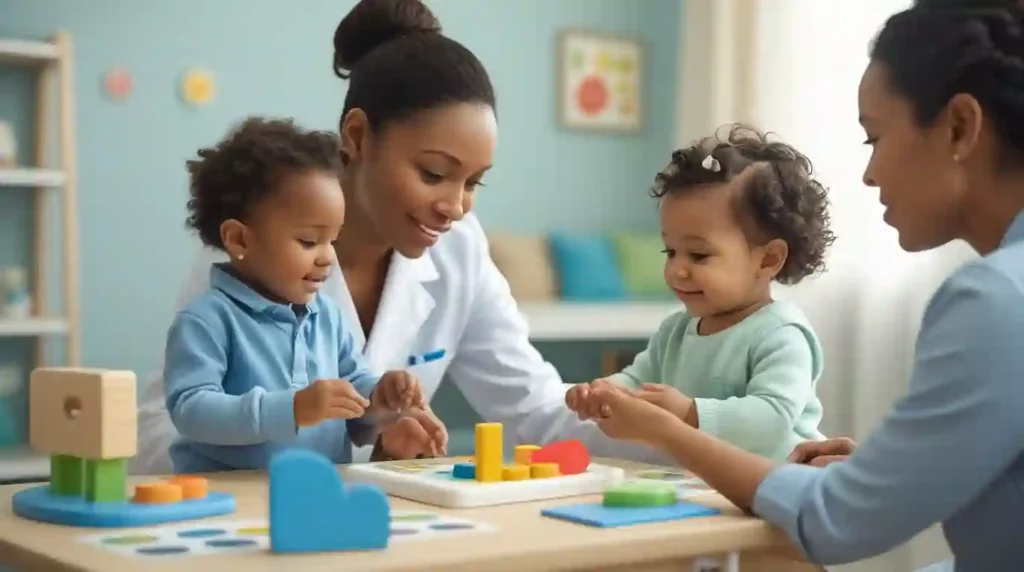
Play-Based Therapy For young children, the most effective therapy happens through play. Therapists use toys, books, and games to encourage communication in natural, fun ways. This might include bubbles to practice lip rounding, toy animals for vocabulary building, or interactive songs to improve rhythm and sound production.
Parent Training and Coaching Since parents spend the most time with their child, parent training for speech delay is crucial. Therapists teach you specific techniques like parallel talk (describing what your child is doing), expansion (adding to what your child says), and creating communication opportunities throughout the day.
Oral Motor Exercises For children with weak oral muscles or coordination difficulties, therapists may include exercises to strengthen the lips, tongue, and jaw. These activities make it easier for children to produce clear speech sounds.
Augmentative and Alternative Communication (AAC) Some children benefit from using picture cards, sign language, or communication devices while developing verbal speech. These tools reduce frustration and actually support, rather than hinder, spoken language development.
Multidisciplinary Approach Many children benefit from combined services. For example, behaviour therapy for children in Pakistan might address attention and cooperation skills, while occupational therapy for kids in Islamabad can work on sensory issues that affect communication. This integrated approach is one of the strengths of comprehensive centers like Special School of Recovery.
Simple Activities to Encourage Speech at Home
While professional therapy is important, parents play the most crucial role in their child’s language development. Here are practical, research-backed activities you can do daily:
Narrate Your Day Talk about everything you’re doing: “Let’s wash our hands. The water is cold! Now we’re drying with the towel.” This constant language input gives your child words to connect with actions.
Read Together Daily Choose colorful books with simple words. Point to pictures and name them. Ask simple questions like “Where’s the cat?” even if your child can’t answer yet. Repetitive books like “Brown Bear, Brown Bear” are excellent for language learning.
Create Communication Opportunities Instead of anticipating your child’s every need, pause and wait. Put favorite snacks in clear containers they can’t open alone. Place toys on high shelves where they can see but not reach. These situations motivate your child to communicate.
Sing Songs and Nursery Rhymes Music naturally teaches rhythm, syllables, and new words. Songs with actions like “Wheels on the Bus” combine movement with language.
Limit Screen Time The American Academy of Pediatrics recommends no screen time for children under 18 months and limited, high-quality programming for older toddlers. Passive screen time does not support language development the way human interaction does.
Follow Your Child’s Lead Play with whatever interests your child. If they’re fascinated with cars, use cars for teaching. “The red car goes fast! Vroom vroom! Now the blue car.”
Use Simple Language Speak in short, clear sentences just above your child’s current level. If they use one word, you use two. If they use two words, you use three to four.
These home activities for speech delay complement professional therapy and accelerate progress. The most successful outcomes happen when families actively participate in the therapeutic process.
Why Early Intervention Matters
The brain’s language centers develop rapidly in the first three years of life. During this critical period, neural connections form that make language learning easier. Research consistently shows that children who receive speech therapy before age three make more substantial gains than those who start later.
Early speech delays can affect more than just talking. Language development influences social skills, emotional regulation, school readiness, and even behavior. When toddlers can’t communicate their needs, they often become frustrated, leading to tantrums or withdrawal. Addressing speech concerns early prevents these secondary issues.
The academic impact of speech delay becomes significant as children enter school. Reading skills build directly on language abilities. Children with stronger vocabulary and communication skills find learning easier and enjoy greater confidence in classroom settings.
This is why specialists emphasize that waiting to “see if they outgrow it” carries risks. While some children do catch up naturally, others fall further behind each month that passes. A professional evaluation provides clarity and peace of mind, either confirming your child is developing typically or providing a pathway to support.
Why Choose Special School of Recovery (SSR) for Your Child
Parents in Islamabad and across Pakistan face the challenge of finding qualified, compassionate therapy services for their children. Special School of Recovery (SSR) has built a reputation as a leading therapy center for special children in Islamabad by offering comprehensive, evidence-based care.
What makes SSR different is our multidisciplinary team approach. We understand that speech development doesn’t happen in isolation. Our speech therapists work alongside occupational therapists, behavioral therapists, and special education specialists to address your child’s complete developmental needs.
Our therapists hold internationally recognized qualifications and regularly participate in continuing education to provide the most current, effective interventions. We use play-based, child-centered approaches that make therapy enjoyable rather than stressful for young children.
At SSR, we recognize that every child is unique. We create individualized therapy plans based on comprehensive assessments, not cookie-cutter programs. Your child’s interests, strengths, and specific challenges shape their treatment plan.
Parents are partners in the therapeutic process at SSR. We provide regular training sessions, home activity plans, and ongoing communication so you feel equipped to support your child’s progress between therapy sessions.
Our facility provides a safe, welcoming environment where children feel comfortable exploring and learning. We’ve created spaces specifically designed for young children’s developmental needs, with appropriate materials and sensory-friendly settings.
Most importantly, we understand the emotional journey parents go through when their child faces developmental challenges. Our team provides not just therapy but also support, guidance, and hope for families navigating speech delays and other developmental concerns.
Explore our speech, behaviour and occupational therapy services to learn more about how we can support your child’s unique journey.
Real Success Stories from Pakistani Families
Ayesha brought her son Hamza to SSR when he was two and a half years old. Despite being a bright, active child, Hamza used only three words and communicated mainly through pulling his parents’ hands. After six months of regular speech therapy combined with parent training, Hamza’s vocabulary expanded to over 100 words, and he began forming simple sentences. “I wish I hadn’t waited so long,” Ayesha shares. “The transformation has been remarkable, and now he talks non-stop!”
Fatima noticed her daughter Zara wasn’t responding to her name at 18 months and showed limited interest in interactive play. Concerned about both speech and social development, she sought evaluation at SSR. The multidisciplinary team identified speech delay alongside some sensory processing issues. Through integrated speech therapy in Islamabad and occupational therapy, Zara began making eye contact, responding to her name, and gradually developing her vocabulary. “The team didn’t just work with Zara; they educated our entire family on how to support her development,” Fatima explains.
These stories illustrate what’s possible with timely intervention and dedicated support. While every child’s journey is different, early action consistently leads to positive outcomes.
Benefits of Professional Speech Therapy
Professional intervention offers numerous advantages that home efforts alone cannot provide:
- Expert Assessment: Trained therapists identify the specific type of speech or language challenge and underlying causes that parents might miss
- Evidence-Based Techniques: Therapists use proven methods backed by research, ensuring your child receives effective intervention
- Structured Progress Monitoring: Regular assessments track improvement and adjust therapy approaches as needed
- Prevention of Secondary Issues: Early therapy prevents behavioral problems, social difficulties, and academic struggles that can result from communication challenges
- Family Support and Education: Parents learn specific strategies tailored to their child’s needs, making them more effective communication partners
- Peer Interaction Opportunities: Many therapy centers offer group sessions where children practice communication skills with peers in guided settings
- Confidence Building: As children develop communication abilities, their self-esteem and willingness to engage socially improves dramatically
- School Readiness: Speech therapy prepares children for the language demands of educational settings, giving them a strong foundation for learning
The investment in early intervention pays lifelong dividends in your child’s communication abilities, relationships, and academic success.
Frequently Asked Questions About Speech Delay
What are the signs of speech delay in toddlers? Key signs include not babbling by 12 months, using fewer than 10 words by 18 months, not combining words by 24 months, difficulty being understood by family by age 3, and not responding to their name. Other red flags include limited gestures, poor eye contact during communication, and frustration when trying to express needs.
When should my toddler start talking? Most babies say their first meaningful words between 10 and 14 months. By 18 months, toddlers typically use 10 to 20 words, and by age 2, they should combine two words together. However, some children are naturally slower starters. If your child shows strong understanding and uses gestures effectively, delayed talking may resolve with time, but evaluation is still recommended.
How many words should a 2 year old say? A typical two-year-old uses at least 50 words and is beginning to combine them into simple two-word phrases like “more juice” or “daddy bye-bye.” They should also understand much more than they can say, following simple two-step commands. If your 2-year-old has fewer than 25 words and isn’t combining any words, consult a speech therapist.
Can speech delay be corrected? Yes, most children with speech delays make significant progress with appropriate intervention. The earlier therapy begins, the better the outcomes. Many children who receive speech therapy before age three catch up to their peers completely. Even children with more complex communication challenges improve substantially with consistent, skilled therapy.
Does screen time cause speech delay? Research suggests that excessive screen time, especially passive viewing before age 2, is associated with slower language development. Screens don’t provide the interactive, responsive communication children need to develop speech. Real conversations with caregivers are irreplaceable for language learning. Limit screen time and prioritize face-to-face interaction instead.
Is speech delay a sign of autism? Speech delay can be a sign of autism spectrum disorder, but it can also occur independently. Children with autism typically show additional signs beyond just delayed speech, including limited social engagement, repetitive behaviors, intense focus on specific interests, and sensory sensitivities. If you’re concerned about autism, seek evaluation at an autism therapy center in Islamabad for comprehensive assessment.
Conclusion: Take the First Step Today
Watching your toddler struggle with communication can feel overwhelming, but you don’t have to navigate this journey alone. Recognizing early signs of speech delay and taking prompt action gives your child the best possible outcome.
Remember, seeking professional evaluation doesn’t mean something is seriously wrong; it means you’re being a proactive, informed parent. Speech delays are common, treatable, and often resolve completely with appropriate support.
Whether your child is a late bloomer who needs monitoring or requires structured intervention, the team at Special School of Recovery in Islamabad is here to help. Our compassionate specialists will assess your child’s unique situation, answer all your questions, and create a personalized plan that fits your family’s needs.
Don’t let uncertainty hold you back. Trust your instincts as a parent. If you’re concerned about your toddler’s speech development, that concern deserves professional attention.
Book an assessment today at Special School of Recovery (SSR), Islamabad and give your child the support they deserve. Early intervention today creates better tomorrows for your child and your entire family. Contact us to schedule your consultation and take the first step toward helping your child find their voice.
Special School of Recovery (SSR) is a leading therapy center for special children in Islamabad, offering comprehensive speech therapy, behaviour therapy, occupational therapy, and special education services. Our multidisciplinary team is dedicated to helping children reach their full potential through evidence-based, compassionate care.