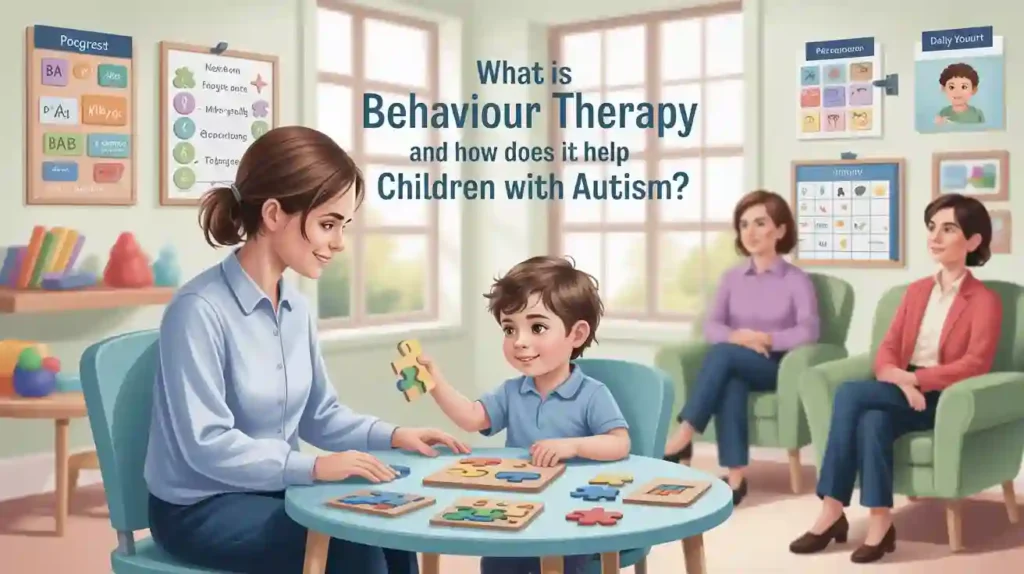
If your child has been diagnosed with autism, you’ve likely heard the term “behaviour therapy” mentioned by doctors, therapists, or other parents. But what exactly does it mean? And more importantly, how can it help your child thrive?
Behaviour therapy is a structured, evidence-based approach that helps children with autism learn new skills, reduce challenging behaviors, and reach their full potential. At Special School of Recovery (SSR) in Islamabad, we’ve seen firsthand how behaviour therapy transforms lives—not just for children, but for entire families.
Let’s explore what behaviour therapy really is, how it works, and why it’s considered one of the most effective autism treatments available today.
Understanding Behaviour Therapy for Autism
Behaviour therapy, also known as Applied Behavior Analysis (ABA therapy), is a therapeutic intervention designed to improve specific behaviors through positive reinforcement and structured teaching methods. Unlike traditional approaches, behaviour therapy focuses on observable actions and uses data-driven strategies to track progress.
Think of it as teaching through small, manageable steps. Instead of expecting a child to suddenly master complex social skills, therapists break down each skill into tiny pieces. For example, making eye contact might start with just glancing at someone’s face for a second, then gradually building up from there.
What Does a Behaviour Therapist Do?
A qualified behaviour therapist works directly with your child to:
- Assess current developmental milestones and challenges
- Create individualized education plans tailored to your child’s needs
- Teach new skills using positive reinforcement therapy techniques
- Reduce repetitive behaviors and challenging behaviors
- Monitor progress through careful data collection
- Train parents and caregivers on effective home strategies
The beauty of behaviour therapy in Islamabad and across Pakistan is that it’s highly adaptable. Whether your child is nonverbal, has mild autism, or faces severe communication challenges, the approach can be customized.
Why Is Behaviour Therapy Important for Children with Autism?
Children with autism spectrum disorder often struggle with social interaction difficulties, communication challenges, and self-regulation skills. These aren’t simply behavioral problems—they’re neurological differences that require specialized support.
Here’s why early intervention therapy through behaviour therapy makes such a difference:
Brain Development Windows: Young children’s brains are incredibly adaptable. Starting behaviour therapy early—ideally before age five—takes advantage of this neuroplasticity. Research shows that early intervention programs can significantly improve long-term outcomes.
Building Life Skills: Behaviour therapy doesn’t just address problem behaviors. It actively teaches adaptive behavior skills that children need for daily life, from toilet training and eating independently to making friends and following classroom routines.
Family Wellbeing: When children make progress, family stress reduces dramatically. Parents feel more confident, siblings feel less overwhelmed, and the whole household becomes more harmonious.
How Does Behaviour Therapy Work for Autism?
The process begins with a comprehensive behavioral assessment. At therapy centers like Special School of Recovery in Islamabad, trained professionals observe your child, talk with you about concerns, and identify specific goals.
The Four-Step Process
1. Assessment and Goal Setting
Every child receives a thorough autism diagnosis and assessment. Therapists identify strengths, challenges, and priority areas. Goals might include improving communication skills development, reducing meltdowns and tantrums, or enhancing motor skills development.
2. Intervention Strategies
Therapists use various techniques including:
- Discrete Trial Training: Breaking skills into small, teachable moments
- Natural Environment Teaching: Learning in real-life settings like playgrounds or home
- Pivotal Response Treatment: Focusing on key skills that unlock other abilities
- Functional Communication Training: Teaching children how to express needs appropriately
3. Positive Reinforcement
When your child demonstrates desired behaviors, they receive immediate rewards—praise, favorite toys, or activities they enjoy. This token economy system helps children understand what behaviors lead to positive outcomes.
4. Progress Monitoring and Adjustment
Unlike guesswork, behaviour therapy relies on therapeutic outcomes measurement. Therapists collect data during every session, analyze what’s working, and adjust strategies accordingly.
Types of Behaviour Therapy for Autism
Not all behaviour therapy looks the same. At centres offering behaviour therapy in Islamabad and Rawalpindi, you’ll find several evidence-based approaches:
Applied Behavior Analysis (ABA Therapy)
The most researched and widely used approach. ABA therapy uses systematic teaching and positive reinforcement to build skills and reduce problem behaviors. Sessions can be intensive (20-40 hours weekly) or moderate, depending on needs.
Verbal Behavior Therapy
A specialized form focusing on language and communication. It’s particularly helpful for nonverbal children or those with speech delay in children.
Cognitive Behavioral Therapy
While more common for older children and teens, this approach helps with emotional regulation and self-regulation skills by connecting thoughts, feelings, and behaviors.
Play-Based Therapy
Learning through play! Therapists use structured games and activities to teach social skills training, turn-taking, and imagination.
What Happens in a Behaviour Therapy Session?
Parents often wonder what actually occurs during these sessions. Here’s a typical structure:
Session Start (5-10 minutes): The therapist greets your child, reviews the day’s goals, and sets up materials. Visual supports and schedules help children understand what’s coming.
Skill Building (30-40 minutes): Using task analysis techniques, the therapist works on specific skills. This might involve prompting and fading strategies—giving help at first, then gradually reducing assistance as the child learns.
Break Time (5-10 minutes): Children need downtime! This might include sensory integration therapy activities or simply free play.
Generalization Practice (10-15 minutes): Practicing new skills in different ways ensures children can use them everywhere, not just in the therapy room.
Parent Feedback (5-10 minutes): The therapist shares what happened, discusses progress, and provides home strategies for practice.
Behaviour Therapy vs Other Therapies: What’s the Difference?
Many parents ask about the difference between behaviour therapy and speech therapy or occupational therapy. The truth is, they complement each other beautifully.
Behaviour Therapy focuses on learning patterns, reducing challenging behaviors, and teaching through reinforcement.
Speech Therapy in Islamabad specifically targets communication—from pronunciation to understanding language to social communication.
Occupational Therapy for Kids in Islamabad addresses sensory sensitivities, motor skills, and daily living tasks like dressing or handwriting.
At Special School of Recovery, we use a multidisciplinary approach, combining these therapies for comprehensive support. A child might receive behaviour therapy to reduce meltdowns, speech therapy to improve verbal skills, and occupational therapy to address sensory issues—all working together.
How Long Does Behaviour Therapy Take to Show Results?
This is every parent’s burning question. The honest answer: it varies.
Some children show improvements within weeks—perhaps better eye contact or reduced aggression. Other skills, like complete toilet training or complex social interactions, may take months or even years.
Several factors influence the timeline:
- Severity of autism symptoms: Children with mild challenges often progress faster
- Age at start: Early intervention typically yields quicker results
- Intensity of therapy: More hours per week generally means faster progress
- Consistency across environments: When parents, teachers, and therapists use the same strategies, children learn faster
- Individual differences: Every child is unique with their own pace
The key is celebrating small victories along the way. When a child who never made eye contact suddenly looks at you while you’re talking—that’s enormous progress.
Benefits of Starting Behaviour Therapy Early
Starting early intervention behaviour therapy for toddlers with autism can be life-changing. Here’s why:
Children develop rapidly in their first five years. Their brains are building millions of neural connections daily. Behaviour therapy during this critical window can reshape developmental trajectories.
Improved Communication Skills: Many nonverbal children develop functional communication through behaviour therapy techniques.
Better Social Interaction: Learning to share, take turns, and respond to peers becomes more natural.
Reduced Challenging Behaviors: Understanding why behaviors happen and teaching alternatives leads to calmer, happier children.
Enhanced Learning Abilities: Children become better at focusing, following instructions, and learning new concepts.
Increased Independence: Daily living skills from feeding to dressing improve significantly.
Academic Success: Children who receive early behaviour therapy often perform better in school settings.
Parent Training and Involvement: Your Critical Role
Here’s something crucial: you’re not just dropping your child off for therapy. Parent involvement in therapy is essential for success.
At autism treatment centers in Pakistan, therapists teach parents the same techniques they use. You’ll learn:
- How to use positive reinforcement at home
- Ways to prevent meltdowns before they start
- Communication strategies that work
- How to create structured routines
- Data collection basics to track your child’s progress
Think of it as learning a new language—the language of behaviour therapy. Once you speak it, you can support your child’s development 24/7, not just during therapy hours.
Finding Qualified Behaviour Therapists in Islamabad
When searching for behaviour therapy in Islamabad, look for professionals with proper credentials:
- Board Certified Behavior Analyst (BCBA): The gold standard for ABA therapists
- Specialized training in autism: Experience matters immensely
- Collaborative approach: Good therapists partner with families, not dictate to them
- Cultural sensitivity: Understanding Pakistani family dynamics and values
At Special School of Recovery Islamabad, our team includes certified behaviour analysts, special education teachers, and child psychologists who understand both international best practices and local cultural contexts.
Behaviour Therapy Success Stories
We’ve worked with hundreds of families in Islamabad and Rawalpindi. While every journey is unique, we’ve seen remarkable transformations.
One mother brought her four-year-old son who had never spoken. Through verbal behavior therapy and functional communication training, he said his first word after three months. Now, two years later, he uses full sentences.
Another family struggled with severe aggression and self-stimulatory behaviors. Their daughter would hit others and repeatedly bang her head. After six months of intensive behaviour therapy focusing on self-regulation skills and positive alternatives, these behaviors reduced by 80%.
These aren’t miracle cures—they’re the result of consistent, evidence-based interventions delivered by trained professionals and dedicated parents.
Cost and Accessibility in Pakistan
Let’s address the practical concern: affordability. Behaviour therapy can be expensive, especially intensive programs.
In Pakistan, costs vary widely depending on:
- Session frequency and duration
- Therapist qualifications
- Location (Islamabad, Lahore, Karachi rates differ)
- Home-based vs center-based therapy
Some centres, including Special School of Recovery, offer sliding scale fees or payment plans. Government support for autism remains limited, but advocacy groups are working to change this.
While insurance coverage for autism treatment in Pakistan is still developing, don’t let cost deter you from seeking assessment. Even modest therapy hours combined with strong parent training can make significant differences.
Combining Behaviour Therapy with Other Supports
The most effective approach combines multiple interventions:
School-Based Behavioural Interventions: Working with your child’s school ensures consistency. Many special needs schools in Islamabad now incorporate behaviour therapy principles.
Home-Based Behaviour Therapy Programs: Therapists come to your home, teaching in your child’s natural environment and training family members directly.
Medical Support: Some children benefit from developmental pediatrician consultations to address sleep problems, eating difficulties, or other medical concerns alongside therapy.
Community Resources: Family support groups, sibling support programs, and respite care help families manage stress while supporting their child’s development.
Common Questions Parents Ask
Can behaviour therapy cure autism completely?
Autism isn’t a disease to cure—it’s a neurological difference. Behaviour therapy doesn’t eliminate autism, but it helps children develop skills, reduce challenges, and live fulfilling lives. Many children make such significant progress that they move from intensive support needs to thriving in mainstream settings.
Will insurance cover behaviour therapy?
Coverage in Pakistan is limited but growing. Check with your insurance provider about autism support services and rehabilitation benefits.
Can behaviour therapy be done at home?
Absolutely! Many families start with center-based therapy to learn techniques, then incorporate home-based behaviour therapy programs. This often accelerates progress.
How do I know if my child needs behaviour therapy?
If you notice delayed developmental milestones, limited eye contact, speech delays, repetitive behaviors, or social interaction difficulties, seek an autism assessment from qualified professionals.
Why Choose Special School of Recovery (SSR)?
At Special School of Recovery in Islamabad, we offer comprehensive autism therapy services rooted in evidence-based practices and delivered with compassion.
Our multidisciplinary team provides:
- Individualized behaviour therapy programs
- Speech therapy in Islamabad for communication development
- Occupational therapy for children addressing sensory and motor needs
- Parent training and family support
- School consultation services
- Progress monitoring using modern behavioral assessment tools
We understand Pakistani families’ unique needs and cultural values. Our approach combines international best practices with local sensitivity, ensuring your child receives world-class care in a familiar, comfortable environment.
Whether you’re in Islamabad, Rawalpindi, or surrounding areas, our doors are open.
Taking the First Step
If you’ve read this far, you clearly care deeply about your child’s future. That dedication is your child’s greatest asset.
Behaviour therapy offers hope, not just for skill development, but for a better quality of life for your entire family. It’s not always easy—there will be challenging days—but the progress is worth every effort.
Don’t wait for the “perfect” time or until challenges become overwhelming. Research consistently shows that early intervention provides the best outcomes.
Your Next Steps:
- Seek professional assessment from qualified autism specialists
- Research local options for behaviour therapy in your area
- Connect with other families who’ve walked this path
- Start learning about autism and evidence-based interventions
- Take action by scheduling that first consultation
Remember, you’re not alone in this journey. Thousands of Pakistani families are navigating similar paths, and professional support is available.
Frequently Asked Questions
What is behaviour therapy for autism?
Behaviour therapy is a structured, evidence-based approach using techniques like Applied Behavior Analysis (ABA) to teach children with autism new skills, improve communication, and reduce challenging behaviors through positive reinforcement and individualized strategies.
How effective is ABA therapy for children?
ABA therapy is highly effective, with research showing significant improvements in communication, social skills, and adaptive behaviors. Early, intensive intervention produces the best outcomes, though children of all ages can benefit.
What age should behaviour therapy start?
Behaviour therapy can begin as soon as autism is diagnosed, often around 18-24 months. Earlier intervention typically leads to better outcomes, but children of any age can benefit from appropriate therapeutic support.
How much does behaviour therapy cost in Pakistan?
Costs vary widely based on location, intensity, and provider qualifications. In Islamabad and Rawalpindi, sessions typically range from affordable group programs to intensive individual therapy. Contact centres like Special School of Recovery for specific pricing and potential payment plans.
Can parents do behaviour therapy at home?
Yes! Parent-mediated behaviour therapy is highly effective. While professional guidance is essential initially, parents can learn and implement many techniques at home, significantly enhancing their child’s progress between formal therapy sessions.
How long are behaviour therapy sessions?
Session length varies by child’s age, needs, and program type. Typical sessions last 1-3 hours, with some children receiving a few hours weekly and others participating in intensive programs of 20-40 hours weekly.
Where can I find behaviour therapy in Islamabad?
Several centres offer quality services, including Special School of Recovery, which provides comprehensive behaviour therapy alongside speech and occupational therapy. Research credentials, read reviews, and schedule consultations to find the best fit for your family.
Book Your Child’s Assessment Today
Every child deserves the opportunity to reach their full potential. If you’re concerned about your child’s development or have recently received an autism diagnosis, don’t wait.
Book an assessment today at Special School of Recovery (SSR), Islamabad and give your child the support they deserve.
Our compassionate team is ready to partner with your family, creating an individualized path toward growth, learning, and independence.
Contact us to learn more about our speech, behaviour, and occupational therapy services and take the first step toward transforming your child’s future.
Special School of Recovery – Where every child’s potential is nurtured, every family is supported, and every milestone is celebrated.